
A Small Archive of Early Experimental Work
Scissors on paper.
Glue drying too slowly.
An image that shouldn’t work, suddenly doing something interesting anyway.
What this is
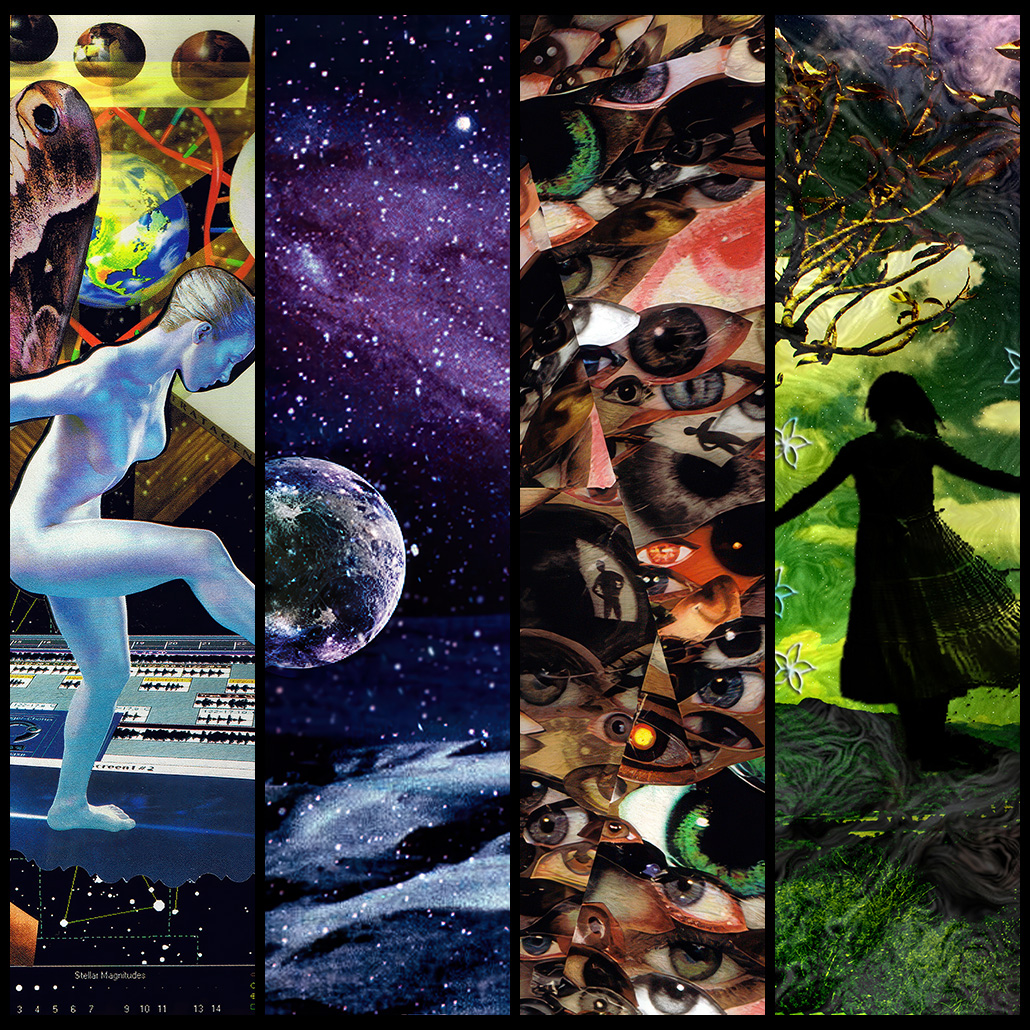
This post accompanies a gallery of my early collage and experimental work—pieces made long before I had any sense of audience, polish, or permanence. Some date back to the 1980s. Most no longer exist in their original form.
What you see here are scans and copies. The survivors.
The quality is imperfect. The resolution is limited. Printing them isn’t possible (It is possible, it’s just that the print would look quite bad.) at the moment. But what remains is something else entirely: evidence of curiosity before strategy, experimentation before restraint, and a period of making where play mattered more than outcome.
Collage as a Way of Thinking
Collage was never just a medium for me. It was a method.
Long before I understood composition or intent, I was cutting images apart to see what would happen when they were forced into conversation. Collage allowed contradiction. It encouraged unlikely pairings. It tolerated mistakes.
You could place things together simply because they felt charged, or wrong, or funny in a way you couldn’t explain yet. Meaning arrived later—if it arrived at all.
That freedom mattered.
The Copies Are the Point
Many of the original works are gone. Lost to time, moves, damage, or the quiet indifference of decades. What remains are copies—photocopies, scans, documentation that was never meant to become the final artifact.
There’s something fitting about that.
Collage itself is already an act of translation: images lifted from their original context and asked to behave differently. These copies extend that process. They’re echoes of echoes. Artifacts twice removed, still carrying the residue of intent.
They aren’t precious.
They aren’t pristine.
They’re honest.
Imperfection as Record
The scans show their age. Colors are off. Edges blur. Details flatten.
But that distortion does something useful—it reminds you that these works were physical. They were handled. Bent. Glued. Layered. They existed in rooms, not files.
You can see where experimentation outweighed skill. Where curiosity outran control. Where the goal was discovery, not cohesion.
That’s not something to fix.
That’s something to notice.


Surreal Pairings and Dream Logic
Looking back, what stands out most is how little I was trying to explain.
The work leans surreal without trying to be clever about it. Images collide instead of blending. Textures interrupt one another. The logic is closer to dreaming than storytelling.
Things appear because they want to, not because they belong.
That looseness—the willingness to let images misbehave—is something I still value. It’s easy to lose once you start caring too much about outcomes.
Why Archive This Now
This gallery isn’t about nostalgia. It’s about continuity.
These early pieces contain the seeds of everything that came later: pattern, contrast, tension, humor, unease, play. They show the long arc of exploration before refinement set in.
Archiving them now isn’t about polishing the past. It’s about acknowledging it. Letting unfinished thinking remain visible. Letting early instincts have their say.
These works aren’t products. They’re documents.
They show what happens when you make without knowing where it’s going. When exploration matters more than preservation. When play leads and meaning follows later—if at all.
What survives isn’t perfection.
It’s momentum.
And sometimes, that’s more interesting.
Leave a Reply